How to Stop Bleeding Gums Naturally : 7 Simple Remedies That Work
How to stop bleeding gums naturally at home is a common question people ask after noticing blood while brushing or flossing. If you’ve experienced this, you’re not alone. Bleeding gums are common but they should never be ignored.
The good news is that in many early cases, you can take simple, natural steps at home to support gum healing and improve oral comfort. Understanding why bleeding happens and how to respond is the first step toward healthier gums.
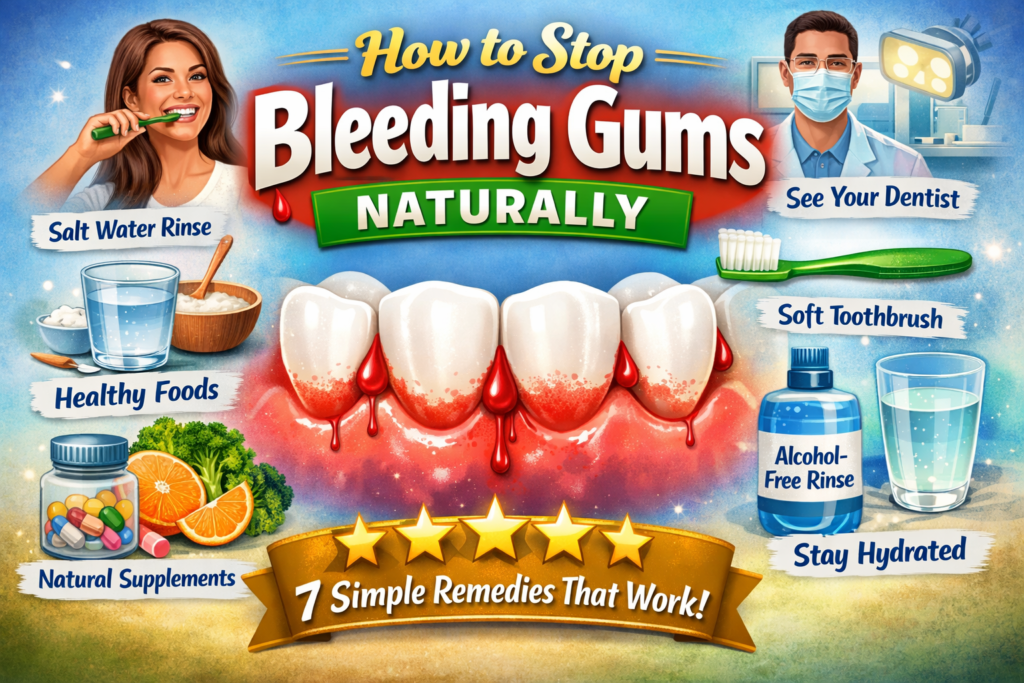
How To Stop Bleeding Gums Naturally
Table Of Contents
- Introduction
- Why Do Gums Bleed?
- Common Causes of Bleeding Gums
- How to Stop Bleeding Gums Naturally at Home
- 7 Simple Remedies That Support Healthier Gums
- Supporting Gum Health From the Inside
- How Long Does It Take for Bleeding Gums to Heal?
- When to See a Dentist
- Final Thoughts
- References
Why Are My Gums Bleeding I Brush? ?
Gums usually bleed because they are inflamed. The most common cause is gingivitis, the early stage of gum disease. Gingivitis develops when plaque a sticky film of bacteria builds up along the gumline.
When plaque isn’t removed effectively, bacteria irritate the gum tissue. This can lead to:
- Redness
- Swelling
- Tenderness
- Bleeding during brushing or flossing
At this stage, gum damage is often reversible with improved care . The key is improving daily oral care while supporting gum health from the inside.
Other factors that may contribute include:
- Brushing too hard
- Irregular flossing
- Vitamin deficiencies
- Dry mouth
- Smoking
- Hormonal changes
Bleeding gums are usually a signal that your mouth needs gentler, more consistent care rather than more aggressive brushing.
How to Stop Bleeding Gums Naturally at Home: 7 Simple Remedies That Work
If gum bleeding is mild and recent, these natural steps can support healing and reduce irritation.
Here are 7 simple remedies that support healthier gums:
1. Brush Gently With a Soft Toothbrush
Switching to a soft-bristled brush and using gentle circular motions protects sensitive gum tissue while still removing plaque effectively.
2. Floss Consistently
Even if gums bleed at first, daily flossing removes bacteria between teeth and helps inflammation decrease over time.
3. Rinse With Warm Salt Water
A mild saltwater rinse can help soothe irritated gums and support the mouth’s natural healing process.
4. Stay Well Hydrated
Drinking enough water supports saliva production, which helps wash away bacteria and maintain a healthier oral balance.
5. Eat Nutrient Rich Foods
Vitamin C, leafy greens, and antioxidant rich foods support gum tissue strength and natural repair.
6. Avoid Aggressive Mouthwashes
Alcohol heavy rinses may irritate gums. Gentler, non alcohol options are often better for sensitive mouths.
7. Support Oral Health From Within
Gum health is connected to overall wellness. Some people choose to explore natural oral health support options as part of a broader routine. For more on this approach, you can read our guide on natural gum health support.
Supporting Gum Health From the Inside
Gum health isn’t only about surface cleaning. Nutrition, immune balance, and the body’s natural defense systems also influence oral comfort.
Because of this, some people explore oral health supplements as part of a broader wellness routine. These supplements are not meant to replace brushing, flossing, or dental care, but to complement healthy habits.
One option sometimes discussed in this context is DentaVive, which is formulated to support oral bacterial balance and gum tissue health from within. While no supplement replaces professional care, internal support may be helpful alongside consistent daily hygiene.
If you want to review ingredients, usage guidance, and safety information, you can learn more through the official DentaVive website.
How Long Does It Take for Bleeding Gums to Heal?
With consistent, gentle care, mild gum inflammation can begin improving within 7 to 14 days. However, healing depends on:
- Daily oral hygiene habits
- Diet and nutrition
- Hydration
- Smoking status
- Overall health
Consistency is more important than quick fixes. Gradual improvement is a sign that gums are responding positively.
When to See a Dentist
Home care helps early gum irritation, but professional care is important if symptoms persist. Schedule a dental visit if you notice:
- Bleeding that doesn’t improve
- Gum swelling or pain
- Pus around the gumline
- Loose teeth
- Worsening gum recession
Early evaluation can prevent more serious issues later.
Final Thoughts
Learning how to stop bleeding gums naturally at home comes down to consistency, gentle care, and supporting your oral health from both the outside and inside. Small daily habits done correctly can lead to noticeable improvement over time.
Healthy gums are built through consistency, not force. By combining proper brushing, flossing, hydration, and supportive wellness habits, you give your gums the best chance to recover and stay strong.
Affiliate Disclosure
This article may contain affiliate links. If you choose to purchase through these links, we may earn a small commission at no additional cost to you. This helps support our content and allows us to continue providing educational health information. We only recommend products that align with the topic discussed.
References
- Centers for Disease Control and Prevention (CDC) – Periodontal Disease Overview
https://www.cdc.gov/oral-health/about/gum-periodontal-disease.html - National Institute of Dental and Craniofacial Research (NIDCR) – Gum (Periodontal) Disease
https://www.nidcr.nih.gov/health-info/gum-disease - Mayo Clinic – Gingivitis: Symptoms and Causes
https://www.mayoclinic.org/diseases-conditions/gingivitis/symptoms-causes/syc-20354453