Why Do My Gums Bleed When I Brush? Causes & Natural Support
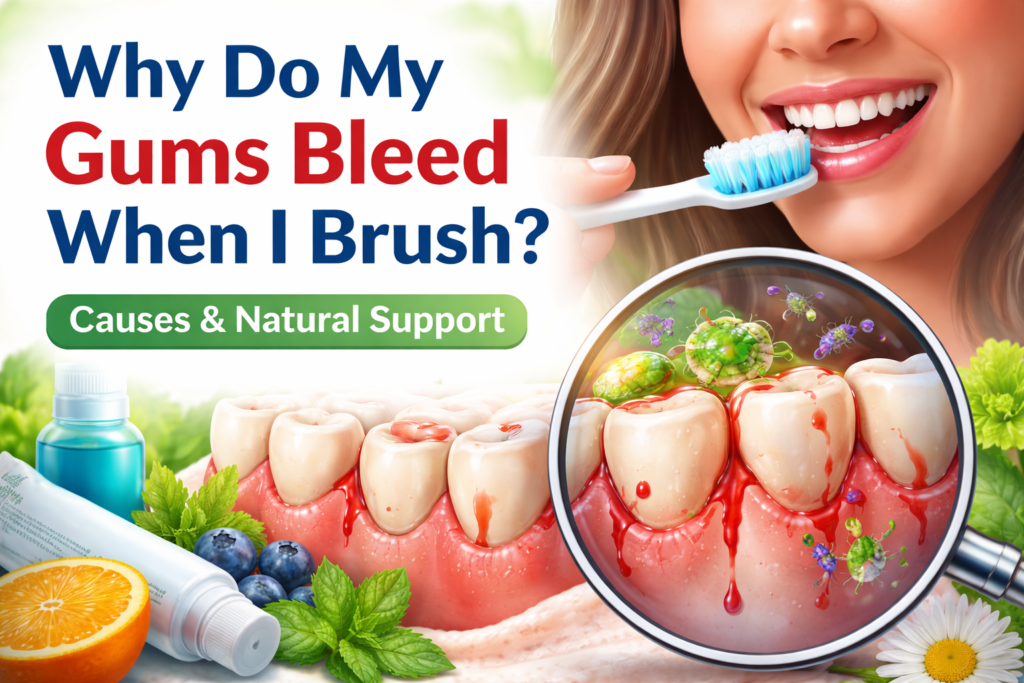
Why do my gums bleed when I brush gum inflammation illustration
If you’ve ever asked yourself, “Why do my gums bleed when I brush?”, you’re not alone ,this is one of the most common gum health concerns.. Seeing blood in the sink can feel worrying, especially if you brush and floss regularly. The truth is, bleeding gums are common ,but they are not something to ignore.
Bleeding gums are often an early sign of inflammation in the gum tissue.. The good news is that, in many cases, small improvements to daily habits and overall health support can help restore gum comfort and strength over time.
Let’s look at why gums bleed, what it can mean, and how you can support healthier gums naturally.
Table of Contents
- Why Do My Gums Bleed When I Brush? Common Causes Explained
- Brushing Too Hard Can Damage Gum Tissue
- Flossing Changes May Cause Temporary Bleeding
- Hormonal Changes Can Affect Gum Health
- Nutritional Deficiencies Can Weaken Gum Tissue
- Dry Mouth Increases Bacterial Growth
- Smoking and Lifestyle Factors
- When Bleeding Gums May Signal Something More Serious
- Natural Habits That Support Healthier Gums
- Internal Support and Oral Wellness
- When Should You See a Dentist?
- The Bottom Line
Why Do My Gums Bleed When I Brush? Common Causes of Bleeding Gums
If you’re still wondering why do my gums bleed when I brush, the answer is often inflammation caused by plaque buildup, brushing technique, or underlying lifestyle factors.
Gingivitis happens when plaque, a sticky film of bacteria, builds up along the gumline, as explained by the American Dental Association.
If it isn’t removed effectively, the bacteria can irritate the gums, leading to:
- Redness
- Swelling
- Tenderness
- Bleeding while brushing or flossing
At this stage, the damage is usually reversible with proper care and improved oral hygiene.
Brushing Too Hard Can Damage Gum Tissue
Many people think bleeding means they should brush harder, but aggressive brushing can actually make the problem worse.
Using a hard-bristled toothbrush or applying too much pressure can irritate delicate gum tissue, causing bleeding even if plaque isn’t the main issue.
A better approach:
- Use a soft-bristled toothbrush
- Brush gently in circular motions
- Avoid scrubbing back and forth along the gumline
Gentle, consistent brushing is far more effective than force.
Flossing Changes May Cause Temporary Bleeding
If you recently started flossing after a long break, you might notice bleeding at first. This can happen because the gums are sensitive and not used to being cleaned between the teeth.
With regular, gentle flossing, the gums usually become healthier and bleeding decreases within a week or two.
However, persistent bleeding shouldn’t be ignored and may need professional attention.
Hormonal Changes Can Affect Gum Health
Hormones influence blood flow and tissue response in the gums. This is why some people experience gum bleeding during:
- Pregnancy
- Puberty
- Menopause
These changes can make gums more sensitive to plaque and inflammation. During these periods, extra attention to oral hygiene and dental checkups is especially important.
Nutritional Deficiencies Can Weaken Gum Tissue
Your gums depend on nutrients to stay strong and repair themselves. A lack of certain vitamins may contribute to gum sensitivity and bleeding.
For example:
- Vitamin C supports collagen production in gum tissue
- Vitamin D plays a role in immune and bone health
- B vitamins help maintain healthy tissues
A balanced diet rich in fruits, vegetables, healthy fats, and whole foods supports gum resilience from the inside.
Dry Mouth Increases Bacterial Growth
Saliva helps protect your mouth by washing away food particles and controlling bacteria. When saliva production decreases , due to stress, dehydration, or certain medications , harmful bacteria can multiply more easily.
This imbalance may increase gum irritation and inflammation over time.
Drinking enough water and maintaining good overall hydration supports a healthier oral environment.
Smoking and Lifestyle Factors
Smoking is strongly linked to gum problems because it affects blood flow and weakens the body’s natural defense systems. Smokers may not always notice bleeding, but gum disease can still progress silently.
Chronic stress can also impact gum health by influencing immune function and increasing inflammation throughout the body.
Natural Ways to Support Healthier Gums and Stop Bleeding
The foundation of gum health is still daily care, but small supportive habits can make a big difference.
1. Improve Brushing Technique
Brush twice daily with a soft brush and fluoride toothpaste, paying gentle attention to the gumline.
2. Floss Consistently
Daily flossing removes plaque between teeth where brushes can’t reach.
3. Eat for Gum Health
Foods rich in vitamin C, leafy greens, and antioxidants help support tissue health.
4. Stay Hydrated
Water helps maintain saliva production and supports a cleaner oral environment.
5. Regular Dental Visits
Professional cleanings remove hardened plaque and allow early issues to be addressed.
Why Do My Gums Bleed When I Brush Even with Good Hygiene?
Internal Support and Oral Wellness
Gum health isn’t only about surface cleaning. The mouth is part of the body’s broader ecosystem, influenced by nutrition, immune function, and overall wellness.
Some people looking for additional support beyond brushing and flossing explore oral health supplements as part of a broader wellness routine. One supplement often discussed in this context is DentaVive, which is formulated to support oral bacterial balance and gum tissue health from within. While supplements don’t replace dental care, they may complement healthy daily habits when used responsibly.
If you want to review ingredient details, usage guidance, and safety information, you can visit the official DentaVive website to learn more.
Because of this, some people explore oral health supplements as part of a supportive routine , not as replacements for brushing or dental care, but as complementary tools.
For readers interested in understanding how internal factors may influence gum comfort and oral balance, you may find our guide on natural gum health support helpful.
When Should You See a Dentist?
You should schedule a dental appointment if you notice:
- Bleeding that lasts more than two weeks
- Gum swelling or pain
- Receding gumlines
- Loose teeth
- Persistent bad breath
Early care can prevent more serious problems later.
The Bottom Line
If you’re wondering, “Why do my gums bleed when I brush?”, the answer is often inflammation caused by plaque buildup, brushing technique, or underlying lifestyle factors.
The encouraging news is that if you’re asking why do my gums bleed when I brush, early gum irritation can often be improved with gentle care, better daily habits, and support for overall oral wellness.
Healthy gums are built through consistency, balance, and informed choices , not force or quick fixes.
References
- Centers for Disease Control and Prevention (CDC). Periodontal (Gum) Disease Overview.
https://www.cdc.gov/oral-health/about/gum-periodontal-disease.html - National Institute of Dental and Craniofacial Research (NIDCR). Gum (Periodontal) Disease.
https://www.nidcr.nih.gov/health-info/gum-disease - Mayo Clinic. Gingivitis — Symptoms and Causes.
https://www.mayoclinic.org/diseases-conditions/gingivitis/symptoms-causes/syc-20354453