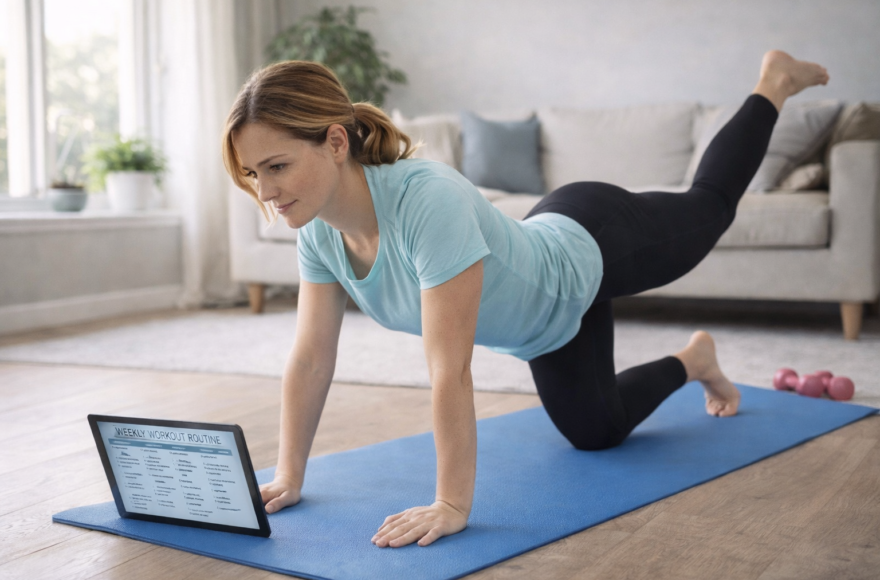
How Often Should Beginners Exercise? A Simple Weekly Guide
Disclosure: This article may contain affiliate links. We may earn a small commission at no extra cost to you if you choose to purchase through these links.
How often should beginners exercise? This is one of the most common questions people ask when starting a fitness routine.Yet many beginners feel uncertain, overwhelmed, or even discouraged before they truly begin. Questions like “Am I doing enough?” or “Am I doing too much?” are incredibly common.
Understanding how often beginners should exercise is not just about fitness .it’s about creating a lifestyle that feels manageable, empowering, and sustainable.
This guide is designed to help beginners move forward with confidence, clarity, and realistic expectations.

Building a healthy routine starts with simple, consistent movement.
Table of Contents
- Why Exercise Frequency Matters for Beginners
- How Often Should Beginners Exercise Each Week?
- Beginner Exercise Frequency by Activity Type
- The Importance of Rest Days for Beginners
- Signs You May Be Exercising Too Often
- Energy, Recovery, and Long-Term Consistency
- How Exercise Frequency Evolves Over Time
- Final Thoughts for Beginners
Why Exercise Frequency Matters More Than Motivation
Motivation comes and goes. Habits last.
For beginners, the biggest factor in long-term success is not intensity or perfectio, it’s consistency. Exercising too often can lead to exhaustion and frustration, while exercising too little can make progress feel slow and discouraging.
The right exercise frequency:
- Builds confidence gradually
- Protects physical and mental energy
- Reduces injury risk
- Encourages long-term commitment
A healthy routine should support your life not compete with it.
How Often Should Beginners Exercise Each Week?
The Simple Answer
Most beginners benefit most from exercising 3 to 5 days per week.
This range allows:
- enough activity to see progress
- enough rest to recover and stay energized
More is not always better. Better is better.
Beginner Exercise Frequency by Activity Type
Walking: The Foundation of a Healthy Lifestyle
Walking is one of the most underestimated forms of exercise and one of the most powerful.
Recommended frequency:
- 4–6 days per week
- 20–45 minutes per session
Walking supports heart health, joint mobility, mental clarity, and stress reduction. For many beginners, it becomes the gateway to a more active life.
Strength Training: Building Strength and Confidence
Strength training helps beginners feel stronger, more capable, and more resilient in everyday life.
Recommended frequency:
- 2–3 days per week
- Full-body routines with rest days in between
Progress here isn’t about lifting heavy, it’s about learning movement and trusting your body.
Running or Jogging: Progress, Not Pressure
Running can be rewarding, but beginners should approach it patiently.
Recommended frequency:
- 1–3 days per week
- Ideally after building a walking base
Many beginners succeed by combining walking and short running intervals. There’s no rush endurance develops over time.
Rest Days Are Not Weak Days
Rest days are part of progress, not a break from it.
During rest, the body:
- repairs muscle tissue
- restores energy
- adapts to training
Beginners who respect rest days often stay active longer and feel better overall.
Aim for 1–2 rest days per week, and remember: recovery supports growth.
Signs You May Need More Recovery
Your body communicates clearly when listened to. Signs you may be overdoing it include:
- ongoing fatigue
- loss of enthusiasm
- disrupted sleep
- lingering soreness
Adjusting frequency is not quitting, it’s learning.
A Beginner Friendly Weekly Exercise Example
Monday: Walking (30 minutes)
Tuesday: Strength training
Wednesday: Rest or light movement
Thursday: Walking or walk-run intervals
Friday: Strength training
Saturday: Walking or active recovery
Sunday: Rest
This kind of structure supports balance, not burnout.
Why Beginners Often Struggle And It’s Not About Willpower
Most beginners don’t struggle because they’re lazy or unmotivated.
They struggle because:
- energy feels inconsistent
- recovery feels slower than expected
- daily life adds stress
Supporting overall energy and recovery is just as important as choosing the right workout schedule.
Energy, Recovery, and Long-Term Consistency
When the body produces energy efficiently, exercise feels more manageable and sustainable. Sleep, nutrition, hydration, and stress management all play critical roles.
When energy levels are supported and recovery feels smoother, beginners often find it easier to stay consistent with their exercise routine week after week.
Some people also explore non-stimulant metabolic support options to complement healthy routines, especially when avoiding caffeine heavy products. If you’re curious, you can read a detailed, research based breakdown in our Mitolyn Reviews 2025 article to understand how it may fit into a balanced lifestyle.
For readers who want to explore further, you can learn more about Mitolyn through the official website, where ingredient details, usage information, and any guarantees are explained directly by the manufacturer.
How Exercise Frequency Evolves Over Time
As confidence grows, beginners often:
- Increase duration gradually
- Add variety to workouts
- Feel more connected to their bodies
Progress doesn’t require perfection. It requires patience.
Final Thoughts: Building a Healthier Life One Habit at a Time
For most beginners, exercising 3–5 days per week is enough to build strength, energy, and confidence without overwhelming the body or mind.
A healthier society is built when people feel empowered, not pressured. Small, consistent steps lead to meaningful change.
If you’re just starting, remember: showing up consistently matters far more than doing everything “right.”
You’re building a healthier future one decision at a time.
References
World Health Organization (WHO). Physical Activity Guidelines for Adults
https://www.who.int/news-room/fact-sheets/detail/physical-activity
Centers for Disease Control and Prevention (CDC). Physical Activity Guidelines for Adults
https://www.cdc.gov/physical-activity-basics/guidelines/adults.html
American College of Sports Medicine (ACSM). Physical Activity Guidelines
https://www.acsm.org/education-resources/trending-topics-resources/physical-activity-guidelines
American Heart Association. Recommendations for Physical Activity in Adults
https://www.heart.org/en/healthy-living/fitness/fitness-basics/aha-recs-for-physical-activity-in-adults