10 Easy Home Workouts for Beginners (No Equipment Needed)
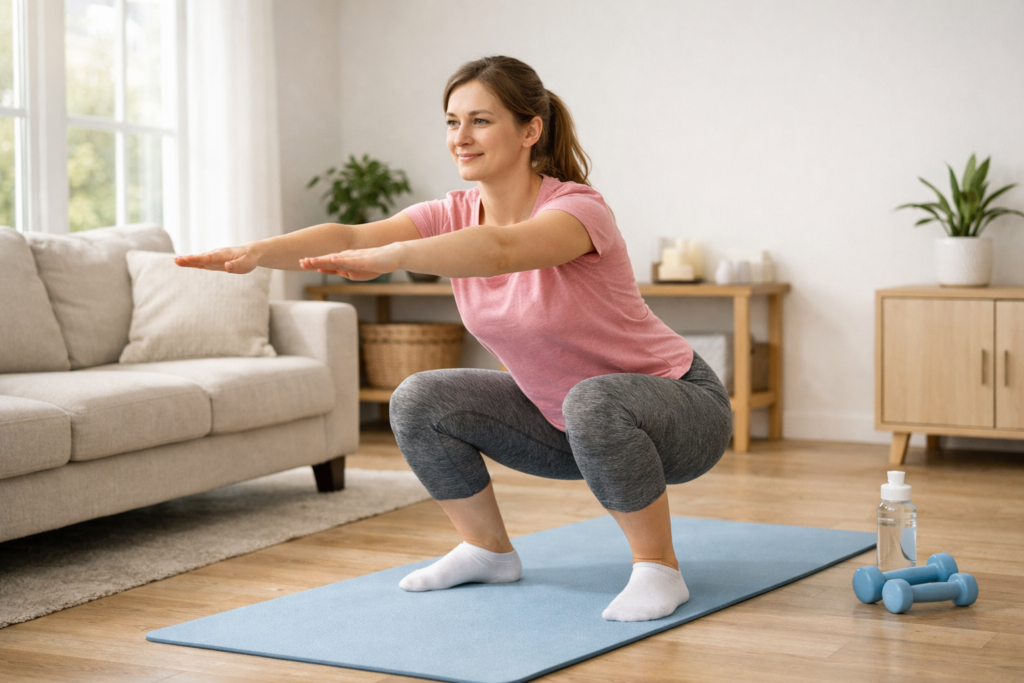
Beginner doing a simple home workout exercise on a yoga mat
Introduction
Starting a fitness routine can feel intimidating, especially for beginners.
That’s why home workouts for beginners are a great place to start.
They are simple, safe, and can be done at home without any equipment.
In this guide, you’ll discover 10 easy beginner fitness exercises that help build strength, improve mobility, and boost daily energy.
American Heart Association. 2024. “American Heart Association Recommendations for Physical Activity in Adults.” January 19.
https://www.heart.org/en/healthy-living/fitness/fitness-basics/aha-recs-for-physical-activity-in-adults.
Why Energy and Metabolism Matter for Beginners
Many beginners start exercising with good intentions but quickly feel frustrated by low energy, slow fat loss, or inconsistent results.
This often isn’t due to effort, but how efficiently the body produces energy at a cellular level.
In 2025, metabolic research increasingly points to mitochondrial health as a key factor in sustainable fat burning and daily energy.
Because mitochondria are responsible for converting food into usable energy, supporting them can make workouts feel easier and more effective over time.
This is why non stimulant, mitochondria focused supplements like Mitolyn are gaining attention among beginners who want steady progress without crashes or jitters.
A Simple Home Workout Routine for Beginners (15–20 Minutes)
Here’s a routine you can follow right away:
Warm-Up (3 minutes)
- Arm circles
- Light stretching
Main Workout (10–12 minutes)
- Squats
- Wall push–ups
- Lunges per legs
- Step–ups per leg
- Glute bridges
- Plank
Cool Down (2–3 minutes)
- Stretching
- Deep breathing
You don’t have to do everything perfectly. Do what you can, take breaks, and stay consistent. Your body will adapt.
Now, let’s look at each exercise individually.
- Walking: A Simple Home Workout for Beginners
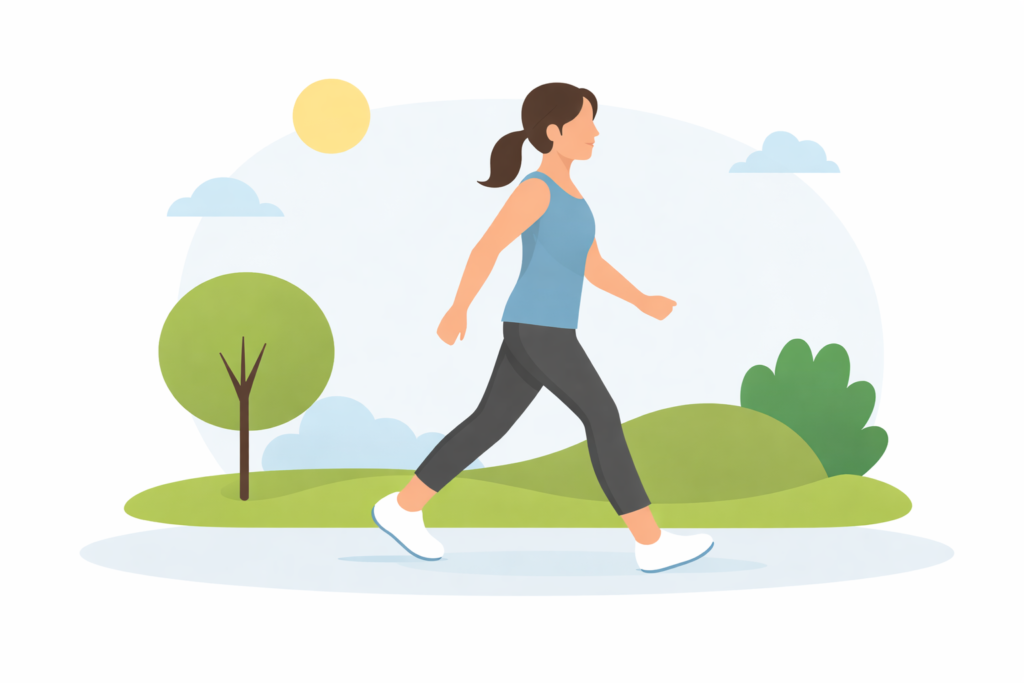
One of the easiest and least appreciated ways of exercising is walking. It is very easy on your joints, and you do not need any equipment for it; you can do it anywhere: in your locality, a park, or even in your house.
Why Walking Helps:
- Improves Heart Strength
- Enhances digestion
- Reduces stress and enhances mood
- Aids weight management
- Improves lung function
Studies have revealed that even 20-30 minutes of daily walking can heal the cardiovascular system and minimize the risk of various chronic diseases. There is no need to walk quickly. You just need to walk at a comfortable pace. Many beginners find that as their daily movement increases, energy levels become more important than intensity.
This is why metabolic support is gaining attention in 2025, helping the body produce energy more efficiently during low impact activities like walking.
Some users report better stamina and consistency when combining light exercise with mitochondrial support supplements such as Mitolyn.Walking is also a great way to support overall wellness when combined with other healthy living tips.
Harvard Health Publishing. n.d. “Walking for Health.” Harvard T.H. Chan School of Public Health.
https://nutritionsource.hsph.harvard.edu/walking/.
A beginner can start walking for 10 minutes and then increase the time.- Squats: Starting from the Ground Up
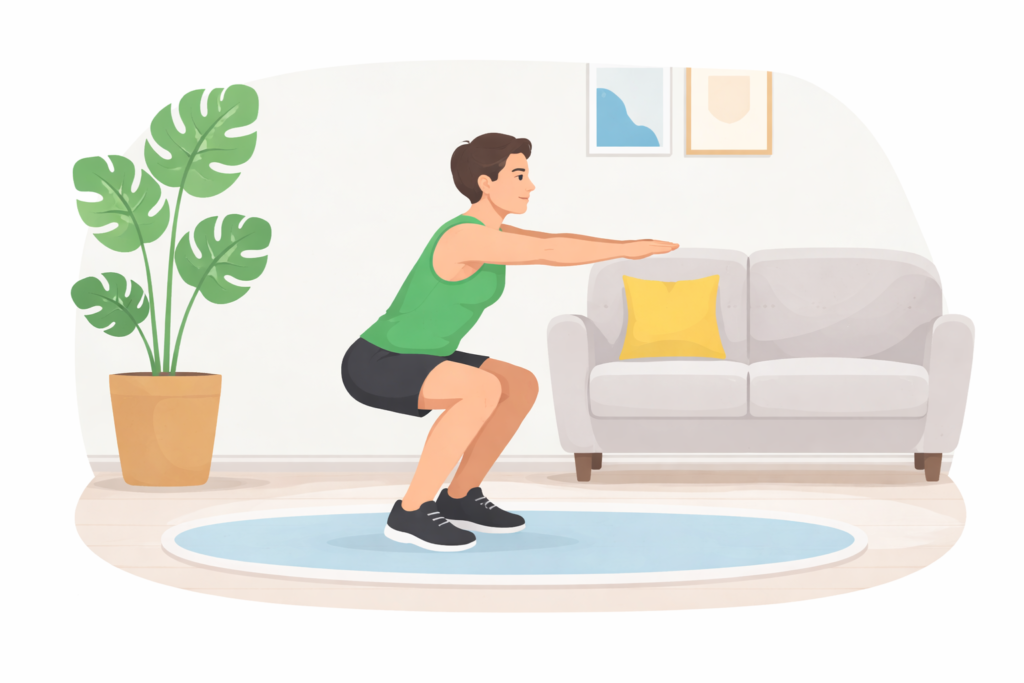
Squats are one of the most effective exercise that you can do without equipment. They workout your leg muscles, core, and buttocks. You rely on these muscles for daily activities like standing, walking, and walking up stairs.
How to Do It:
- Keep your feet shoulder-width apart.
- Push your hips backward.
- Bend your knees.
- Lower your body.
- Keep your back straight and chest raised.
- Stand back up.
Beginner Tip:
If balancing seems difficult, begin by holding onto a chair or wall.
Goal : 3 sets of 10 squats per day.
With time, your legs would begin to feel strong and your balance would increase.
- Wall Push-Ups: An Introduction to Strength in Upper Body
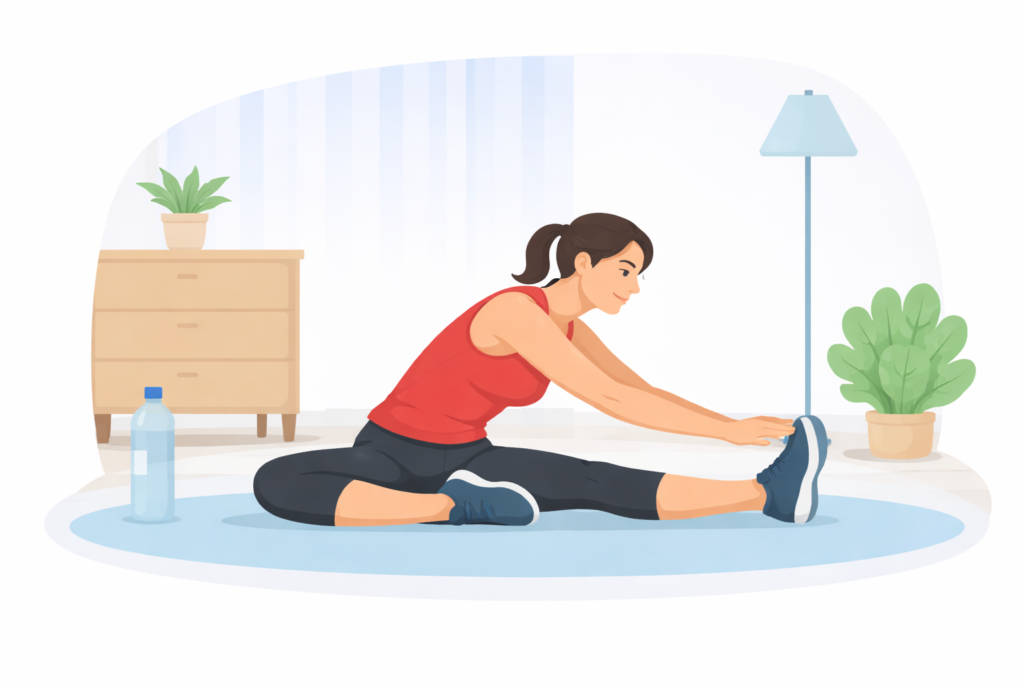
Push-ups may seem scary for a newbie, particularly when a beginner has not yet built enough upper-body strength. . Wall push-ups are a great alternative for Armando to tone up his muscles without straining his wrists or back.
How to do Wall-Push Ups:
- Stand facing a wall.
- Place your palms on the wall at shoulder height.
- Step back slightly.
- Bend your elbows and lean your body toward the wall.
- Push back to the starting position.
Goal : 3 sets of 10 to 15 repetitions
This exercise can really help build strength in your arms, chest, and shoulder muscles.
- Lunges: Balancing & Stabilizing Legs
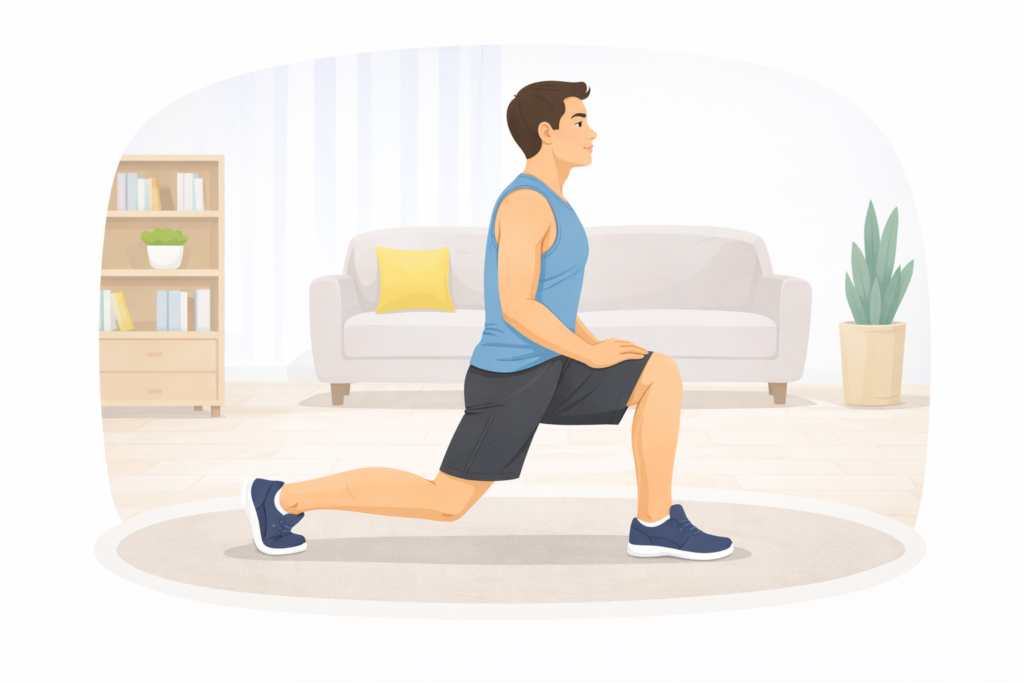
Lunges also enable you to develop balance and strength in your body. They target your core, abs, lower back, hips, and shoulders legs and buttocks and also work on your posture.
Proper Execution of Lunges:
- Step one foot forward.
- Lower your body until both knees are bent.
- Push back into a standing position.
- Repeat on the other leg.
Goal : 10 lunges per leg.
If balance problems persist, use a kitchen counter or stable chair for support until comfort level increases.
- Plank: Targeting Your Core Muscles from Multiple Positions
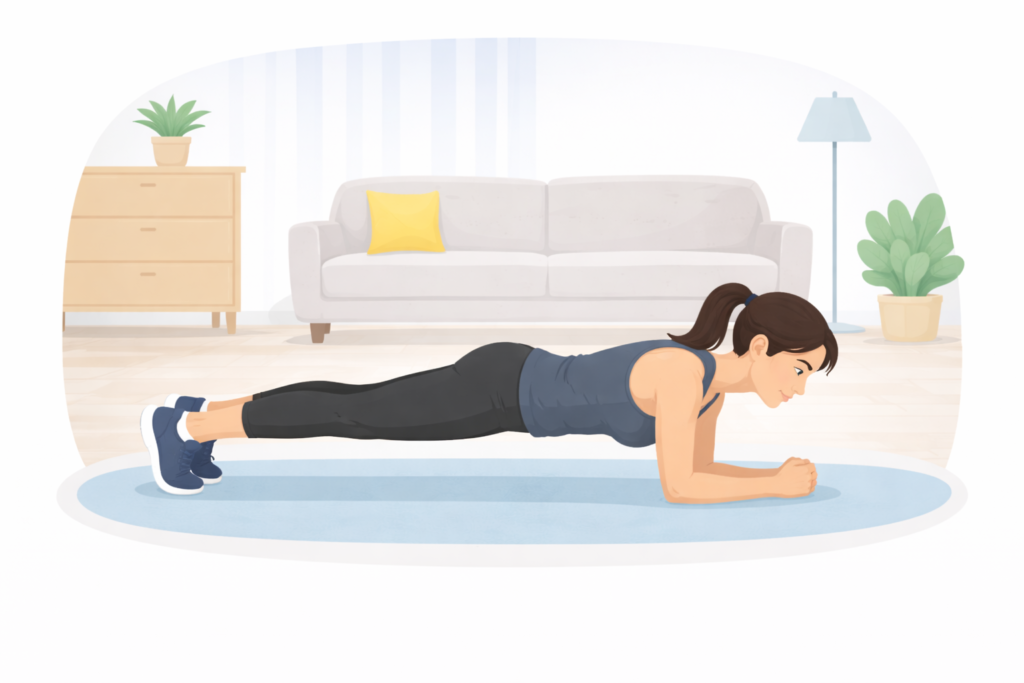
The plank may appear to be a simple exercise. The plank exercise engages your core, abs, lower back, hips, and shoulders, helping build overall body stability.
How to Do It:
- Place yourself on your elbows and toes.
- Keep your body in a straight line.
- Engage your abdominal muscles.
- Hold the position for as long as is comfortable.
Goal : To begin with, it should last for 20 to 30 seconds
Remember that quality always stands before the duration. Do not let your hips droop, as this can be harmful to your back.
- Glute Bridges: Hip and Back Strengthening Exercise
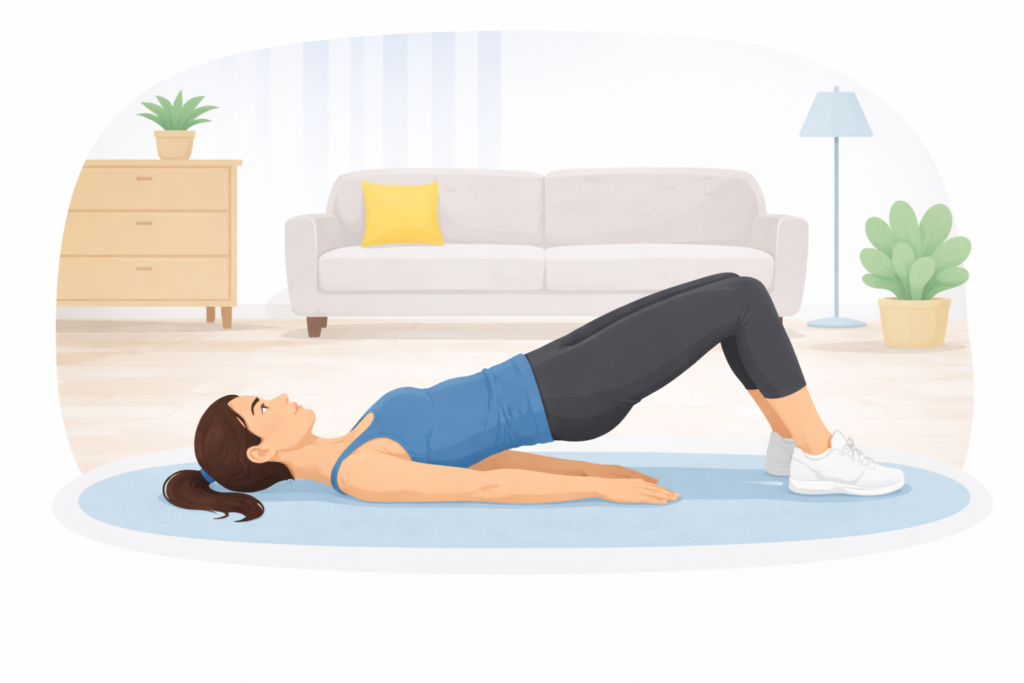
Glute bridges are a great exercise to strengthen your lower back and hip extensors, and can also be very helpful to improve your posture if you sit a lot during the day.
How to Do It:
- Lie on your back.
- Bend your knees and keep your feet flat on the floor.
- Raise your hips slowly.
- Contract your buttocks at the top.
- Lower your hips back down.
Goal : 3 sets of 15 reps.
It’s a low impact exercise and one that’s excellent for those who are new to working out as it relieves stiffness
- Arm Circles: Increasing Shoulder Mobility
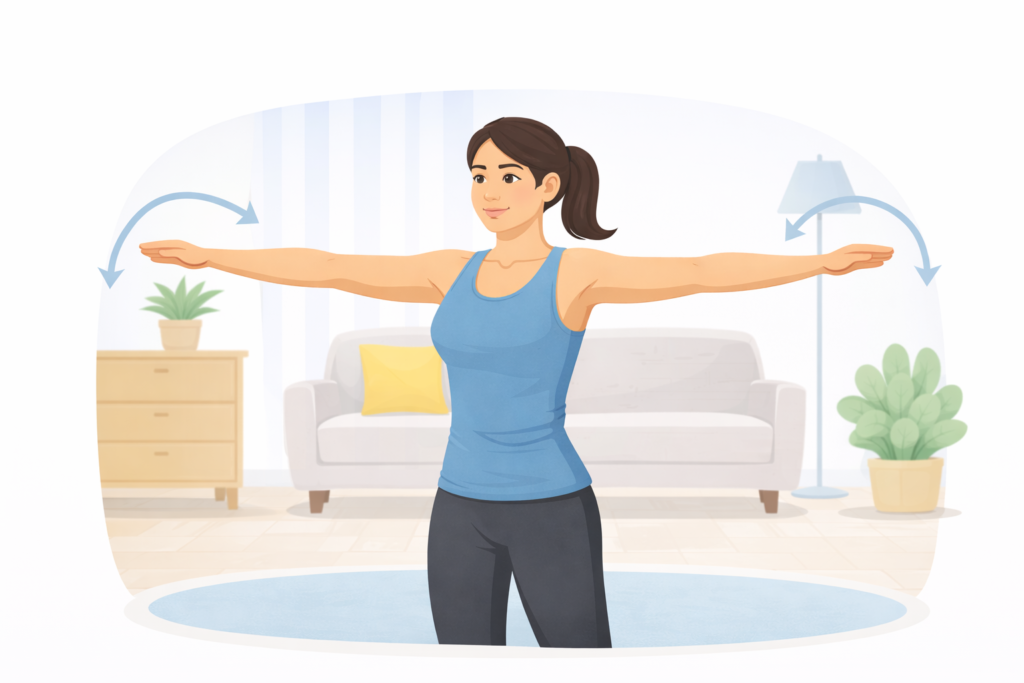
Shoulder rotation increases the blood flow to the shoulders and increases the mobility of the shoulders. Such an exercise can also be effective for people using computers.
How to Do It:
- Extend your arms out to the sides.
- Keep your hands in a relaxed position.
- Move your arms in small circles forward.
- Then move them in small circles backward.
Goal : 20 circles forward and 20 backward.
You could also incorporate these stretches into your morning routine as you try to relax your tight shoulder muscles.
- Light Stretching: Keeping Your Body Flexible
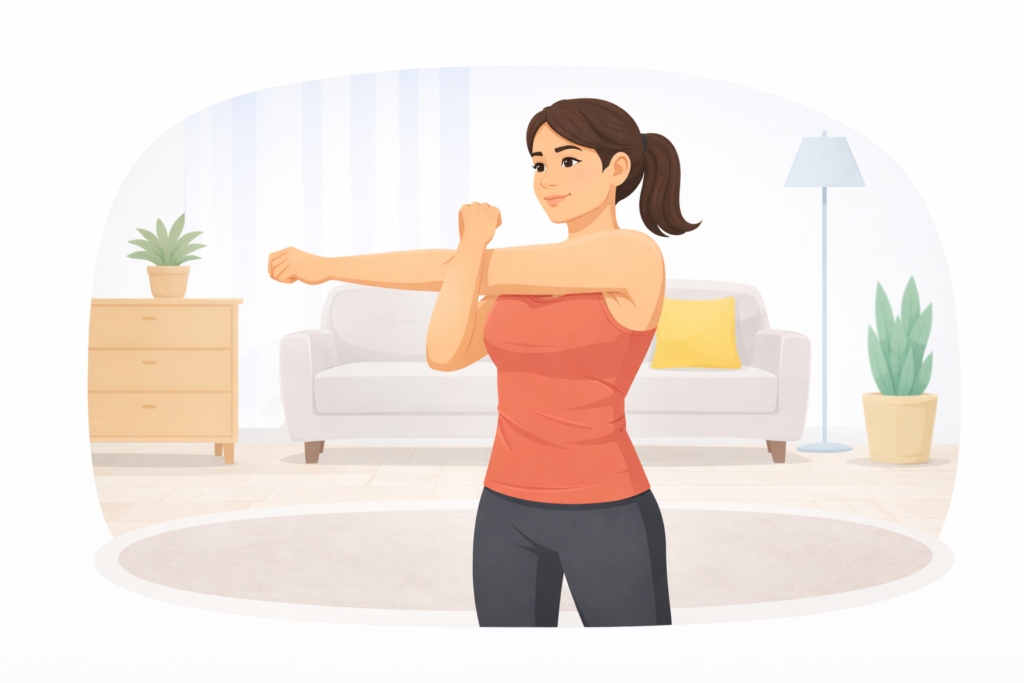
Stretching is something that is often underrated, but it’s a very big part of maintaining flexibility and minimizing tension within muscles. It’s really beneficial to spend a few minutes a day stretching. It could greatly improve your posture, relieve stress, and even prevent injuries.
Tips for Stretching:
- Stretch slowly and do not bounce.
- Hold each stretch for 10 to 20 seconds.
- Breathe deeply while stretching.
- Focus on areas like the neck, back, and legs.
Goal : 5 minutes a day.
Stretching exercises can be conducted any time, after waking up, during work breaks, or before going to bed.
- Step Ups: Building Leg Power and Balance
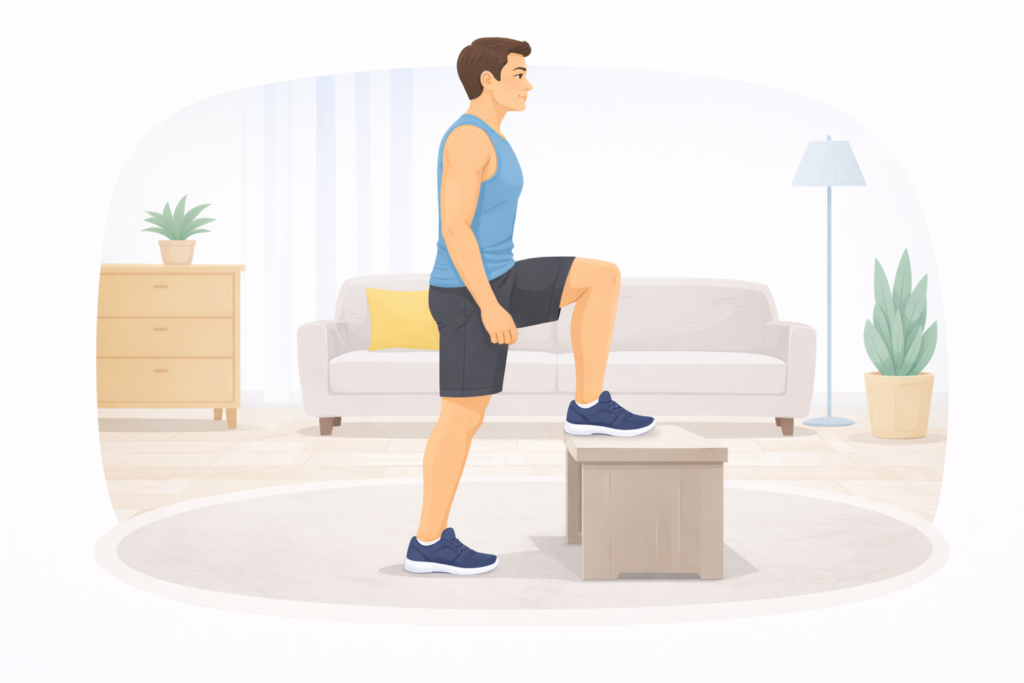
A step up is a simple exercise that simulates the motion of climbing stairs. A step up requires only a sturdy step stool or platform. There are several variations of a Step Ups
How to Do Step–Ups :
- Place one foot on the step.
- Push down through your heel to lift your body.
- Step back down carefully.
- Repeat on the other leg.
Goal : 10 Repetitions per Leg.
This exercise strengthens legs and is very effective for increasing mobility.
- Deep Breathing: Ending Your Routine With Calm
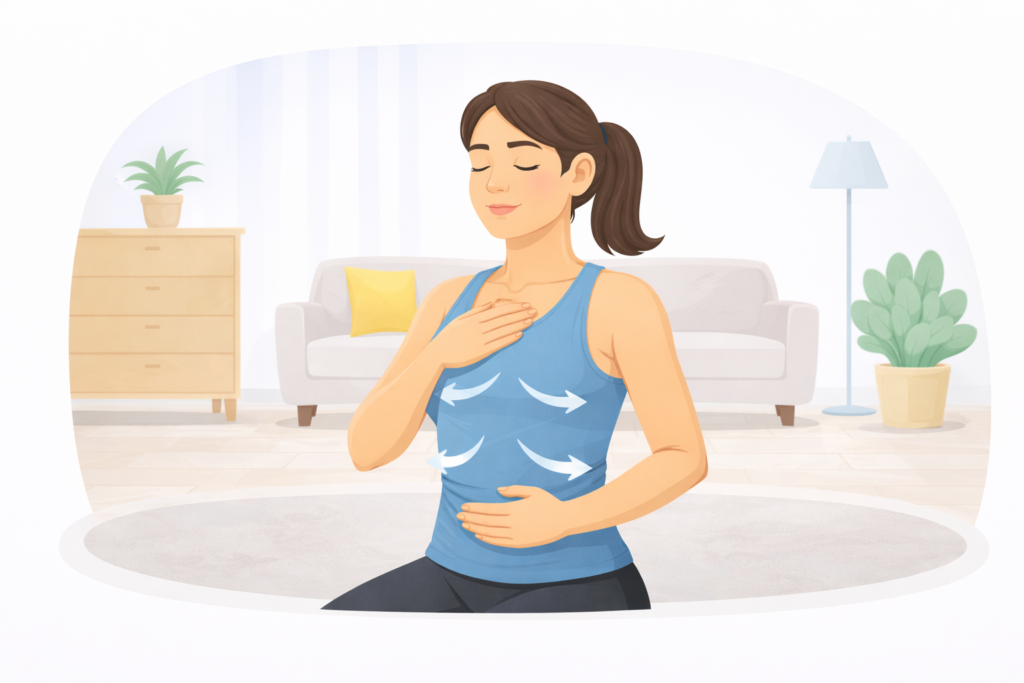
Exercise isn’t just about moving your body your mind needs to be factored in as well. Deep breathing can help to calm your nervous system, relieve stress, and increase the amount of oxygen that reaches your
How to Do It:
- Sit or stand comfortably.
- Take a deep breath through your nose.
- Hold the breath for 2 seconds.
- Exhale slowly through your mouth.
Goal : Take 10 deep, slow breaths.
Taking a cold shower can increase circulation and help you feel refreshed after exercise.
once. You can proceed slowly but surely, taking time to celebrate every step, big or small.
Assembling the Puzzle: Your Simple Everyday Workout Routine
Here is a simple 15–20 minute workout routine designed for beginners.
You can follow this routine daily or adjust it based on your comfort level.
Warm-Up (3 minutes)
- Arm circles – 1 minute
- Light stretching – 2 minutes
Main Workout (10–12 minutes)
- Squats – 3 sets
- Wall push-ups – 3 sets
- Lunges – 10 repetitions per leg
- Step-ups – 10 repetitions per leg
- Glute bridges – 3 sets of 15
- Plank – 20 to 30 seconds
Cool Down (3–5 minutes)
- Light stretching – 3 minutes
- Deep breathing – 10 slow breaths
Optional
- Walking – 10 to 20 minutes
Supporting Your Routine:
Consistency is the most important factor for results.
Alongside regular movement, many beginners also focus on improving how their body produces energy and burns fat at the cellular level.
Over time, this support can make it easier to stay consistent and build confidence in your routine.
Conclusion:
Fitness shouldn’t be intimidating or difficult. It’s about getting your body moving, taking care of your health, and building habits that support long-term well-being.
With these 10 easy home workouts, you can begin your fitness journey on your own terms and from the comfort of your home. Whether your goal is more energy, better sleep, less stress, or improved strength, consistency is what matters most. Focus on showing up regularly, listening to your body, and allowing progress to happen gradually.
If you’re starting your wellness journey, explore more simple health tips on Beahealthy to support a healthier daily lifestyle.
For beginners who stay consistent with exercise but still feel low on energy or notice slow progress, learning more about metabolic health can be helpful. This is where mitochondria-focused supplements like Mitolyn are sometimes explored, as they aim to support metabolic efficiency alongside regular movement.
Understanding how Mitolyn works and whether it fits your goals may be a useful next step alongside regular movement.
References!
Mayo Clinic Staff. n.d. “Exercise: 7 Benefits of Regular Physical Activity.” Mayo Clinic.
https://www.mayoclinic.org/healthy-lifestyle/fitness/in-depth/exercise/art-20048389.
Harvard Health Publishing. (n.d.). Walking for health. Harvard T.H. Chan School of Public Health.
https://nutritionsource.hsph.harvard.edu/walking/
American Heart Association. (2024, January 19). American Heart Association recommendations for physical activity in adults.
https://www.heart.org/en/healthy-living/fitness/fitness-basics/aha-recs-for-physical-activity-in-adults
Cleveland Clinic. (2020, May 29). Why a strong core is the best guard against back pain.
https://health.clevelandclinic.org/strong-core-best-guard-back-pain/
American Council on Exercise. (2015, January 12). Total-body workout for beginners.
https://www.acefitness.org/resources/pros/expert-articles/5248/total-body-workout-for-
NIH / U.S. National Library of Medicine. Exercise and Physical Fitness.
https://medlineplus.gov/exerciseandphysicalfitness.html